

First, how long the castle actually takes
An hour.
The single most useful thing to know before you go in is this:
The stairs are far too steep.
— Akiko, forty years in Matsumoto
They are the original stairs, and in places they are more or less ladders. If you have bad knees, or you're carrying a small child, factor that in.
It is busiest during the Japanese school summer holidays in August. Go early in the day if you can.
After the castle, a lot of people go and eat soba, or an oyaki dumpling.
Matsumoto has no famous dish. Genuinely, none.
Most Japanese towns have a thing. You go to Hiroshima for the okonomiyaki, to Sapporo for the ramen. We asked what you absolutely must not leave Matsumoto without eating. The answer was immediate and slightly deflating:
There isn't one. There's no "you'd regret not eating this before you left." No signature dish.
Oyaki? That's the whole of Nagano, not Matsumoto specifically.
— Akiko
For what it's worth, she does rate the soba: "the soba is good everywhere." Not at one famous shop — everywhere. Which is a clue about how this town works.
Why the individual shops here are unusually good
Here is the thing that took us a while to understand, and it explains most of what follows.
The market here is small, so chains find it hard to move in. We're surrounded by mountains, so the catchment area never gets big — only people from around Matsumoto come. Anywhere else, you'd have to cross a mountain pass to get here.
So independent restaurants developed instead. Even compared with Nagano City, there are far more of them. People who move here for work say the standard of the restaurants is high — and I think they're right.
— Akiko
The mountains make the market too small for the national chains to bother with, and independent shops took root and grew in that gap instead. That, at least, seems to be what happened.
So: no famous dish, but a lot of genuinely good places to eat. It also means the good places are not concentrated anywhere in particular — which is the awkward bit, and roughly why guided walks exist here.
Three places a local actually goes
1. Pantry Maru Naka — a bakery, five minutes from the castle
A long-established bakery, open very early. Akiko used to go in the morning, eat a bagel sandwich there, and head to work.
It's not fashionable bread — it's the old-fashioned kind. And the mayonnaise is good.
— Akiko
That is a more useful recommendation than it sounds. This is not a bakery that has been styled for photographs — it is one that has kept the same people coming back for decades, which in a town this size is the harder thing to do. You can eat in, which matters when it is cold.
2. Restro Rin — lunch, dinner, or a deli counter to take away
A meat-focused restaurant a short walk from the castle. Game is on the menu, and it shows in the meat. The house-made bread that comes alongside it is good too, and so is the view from inside. There is a deli café attached.
I'll buy something from the deli, take it home, and eat it there with a glass of wine.
— Akiko
3. A well, about ten minutes' walk away
Not a viewpoint or an attraction. A well. She fills a bottle there on her way to the gym. This needs its own section.
The water is the actual attraction
Matsumoto sits on groundwater from the mountains, and it comes up all over the town.
Three things worth knowing:
Some of them are not for you. There are public wells anyone may drink from, and there are private ones on private land that simply happen to be visible from the street. You are unlikely to be told off — but helping yourself is the same as using the tap at somebody's house.
They taste different from each other. People who care about this use different wells for different purposes — one for coffee, another for green tea, another for simmering food.
People genuinely use them. This is the part we assumed was folklore, and it isn't:
Loads of people fill up. With tanks. Older men, mostly. My sister does it too.
They say it's to save on the water bill, but it isn't the bill. I think it's the taste.
— Akiko
There is a spring-water map available at the tourist information office in Matsumoto Station, which marks which wells are public. Pick it up before you start walking — it is the single most useful thing you can be holding in this town. Failing that, bring someone who already knows which taps are fair game.
The supermarket. Seriously.
When we asked which stop she most wanted on the walking tour she designed, the answer was not a temple or a viewpoint:
Honestly? A supermarket. Because when I go somewhere, that's where I want to look.
— Akiko
The one to look for is Tsuruya, which only exists in Nagano and the prefectures around it. What makes it worth your time is the own-brand range built on local produce — a seasoning packet for mushroom rice, apple butter jam, fruit juice, fresh soba, pickles — and the speed at which new products appear. Anything you might want to take home as a present is there, and it is cheap.
Good, and cheap.
— Akiko
At the Matsumoto stores, you will not see foreign visitors, because you can't walk to them. They are in the suburbs rather than the centre — which is exactly the kind of thing that doesn't show up in a guidebook, and exactly the kind of gap a local fills.
Nakamachi and Nawate: a local's honest verdict
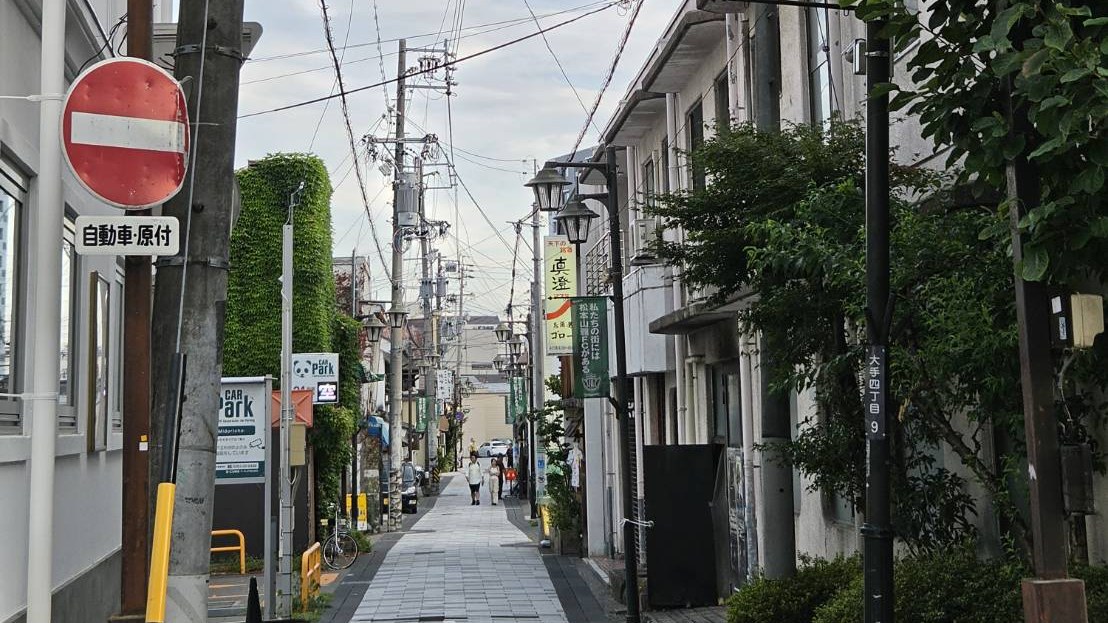
These are the two streets every article about Matsumoto sends you to — the black-and-white storehouses, the frog-themed lane. We asked what locals actually think of them.
There's still a lot of room to grow. I think it could be so much more than it is.
— Akiko
Note what she is not saying. The complaint is not that these streets have become too touristy — it is that they haven't gone far enough. Matsumoto brands itself as a craft town, and the difficulty with craft as a civic identity is the price of entry:
There isn't much an ordinary person can just casually buy. You look at something and think, this costs how much?
People who are into it love it. But it feels like the audience it reaches is a narrow one — enthusiasts, really.
If it were more like Takayama — things you can eat as you walk — far more people could enjoy it.
— Akiko
You can enjoy the atmosphere and the look of the streets. But if you arrive wanting to buy something, or wanting to eat, you may come away unsatisfied.
The places we couldn't put on a tour
Worth knowing, because it affects your own planning as much as ours. Several of the best small places in Matsumoto had to be left off the walking route — a delicatessen, a bento shop — for one reason:
Opening hours. So many of them are only open at weekends, or they close on no fixed schedule — "check Instagram for the opening days."
When you run your own place, you can work on your own terms. I think a lot of people here do.
— Akiko
This is the flip side of a town full of owner-operated shops. The independence that makes the food good also makes the opening hours unreliable. If there is somewhere specific you want to eat, check their social media before you go — it is usually the most accurate source.
Akiko's own view was simply that she'd like to take people to them. When the timing happens to work, that is exactly what she does.
So what do you do with the afternoon?
Roughly this. The castle in the morning, before it fills up. Then soba — although every soba place has a queue, so keep restaurants, bakeries and deli counters on the list too: take the edge off your hunger first and then try for soba, or simply go outside the peak hours. A bottle filled at a public well, using the map from the station. The craft streets, walked through with realistic expectations. A supermarket, if you can get to one.
None of it is spectacular. That is the point of the place. Matsumoto has no dish you must eat and no single sight beyond the castle — what it has is a very high floor, spread thinly across an ordinary working town, most of it behind doors that don't announce themselves.